How Healthcare Staffing Companies Can Use Nurse Email Lists
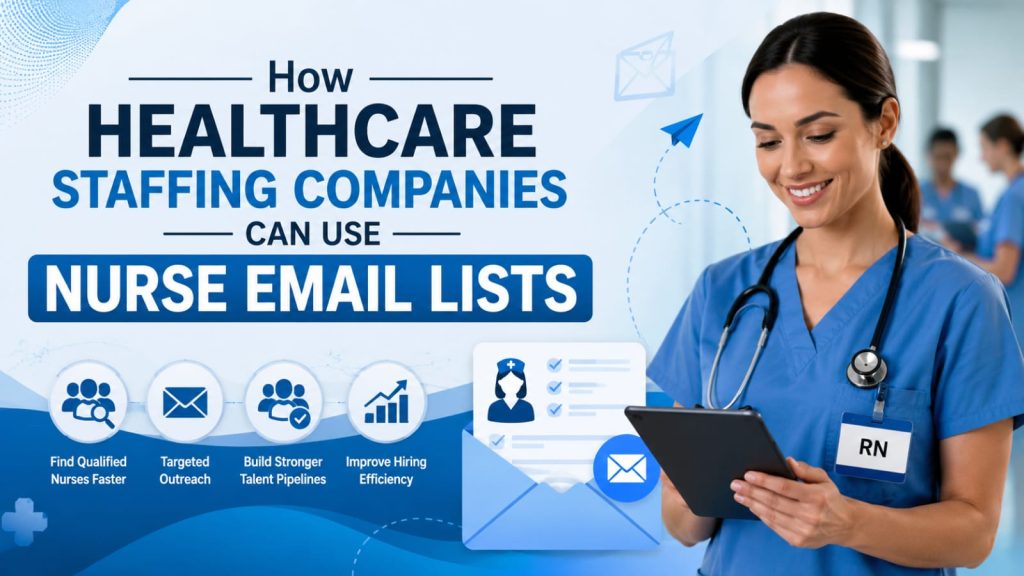
Healthcare staffing companies need efficient ways to connect with qualified nursing professionals as hospitals, clinics, long-term care facilities, and other healthcare organizations continue to manage changing workforce requirements. A Nurses Email List can support these efforts by helping staffing companies organize professional contacts and develop targeted communication campaigns.
Rather than sending the same message to every nursing professional, staffing organizations can use segmentation, relevant content, and personalized outreach to communicate with specific audiences. When combined with responsible data practices and a broader recruitment strategy, email marketing can become a useful channel for building awareness and supporting nurse recruitment.
What Is a Nurse Email List?
A nurse email list is a collection of professional contact information associated with nurses and nursing professionals. Depending on the source, the data may include professional names, nursing specialties, job titles, locations, healthcare organizations, and business or professional email addresses.
For staffing companies, this information can help organize recruitment campaigns according to specific hiring requirements.
For example, a staffing company recruiting intensive care nurses may want to communicate with professionals who have relevant experience rather than sending the same opportunity to a broad healthcare audience.
However, the usefulness of an email list depends on data quality. Outdated contact information, duplicate records, and irrelevant contacts can reduce campaign performance. Staffing companies should therefore evaluate data accuracy and use appropriate email marketing practices before beginning outreach.
Why Email Marketing Matters for Healthcare Staffing
Healthcare recruitment can be competitive, particularly for specialized nursing positions. Staffing companies often need to maintain relationships with potential candidates even when there is no immediate job opening that matches their profile.
Email marketing can help recruiters maintain communication with nursing professionals over time.
Potential benefits include:
- Building awareness of staffing opportunities
- Communicating new vacancies
- Segmenting candidates by specialty
- Sharing educational resources
- Supporting candidate nurturing
- Promoting recruitment events
- Maintaining long-term professional relationships
Email should not replace other recruitment channels. Instead, it can work alongside job boards, social media, professional networking, recruitment platforms, referrals, and direct recruiter communication.
1. Segment Nurses by Specialty
One of the most effective ways staffing companies can use nurse contact data is specialty-based segmentation.
Different healthcare facilities have different staffing requirements. A hospital looking for critical care professionals may have very different needs from a long-term care facility seeking experienced nurses.
Staffing companies can organize their outreach around specialties such as:
- Registered nurses
- Nurse practitioners
- ICU nurses
- Emergency room nurses
- Pediatric nurses
- Oncology nurses
- Operating room nurses
- Home healthcare nurses
- Critical care nurses
- Psychiatric nurses
This segmentation allows recruiters to send opportunities that are more closely aligned with professional experience and interests.
2. Target Nurses by Location
Geographic targeting is another useful approach for staffing companies.
A nurse may be interested in opportunities based on location, commuting distance, relocation possibilities, or the availability of remote administrative positions. Staffing companies can organize campaigns by cities, states, regions, or broader recruitment markets.
For example, a staffing company recruiting nurses for hospitals in Texas could create a campaign specifically for nursing professionals who are relevant to that market.
Location-based campaigns can include information about:
- Available positions
- Healthcare facilities
- Shift options
- Relocation support
- Local recruitment events
- Contract opportunities
The information should remain accurate and clearly communicate the location and requirements of each opportunity.
3. Promote Open Nursing Positions
The most direct use of a nurse email list is communicating relevant job opportunities.
Instead of sending a generic list of every available vacancy, staffing companies can segment job alerts according to specialty and experience.
For example, an ICU nurse could receive information about relevant intensive care positions, while a pediatric nurse could receive pediatric opportunities.
A useful job email should clearly explain:
- Job title
- Location
- Employment type
- Required qualifications
- Experience requirements
- Shift information
- Application process
- Relevant contact information
Clear information helps recipients quickly determine whether an opportunity is appropriate for them.
4. Build Candidate Nurturing Campaigns
Not every nurse will be ready to apply when they first interact with a staffing company.
Some professionals may be considering a career move months in advance. Others may be interested in contract positions but currently have employment commitments.
Recruiters can use email nurturing campaigns to maintain relationships with these candidates.
A simple sequence could include:
Email 1: Introduction to the staffing company
Email 2: Relevant nursing opportunities
Email 3: Career resources for nurses
Email 4: Information about contract or permanent roles
Email 5: Invitation to speak with a recruiter
This approach keeps communication active without requiring recruiters to contact every candidate manually.
5. Share Useful Career Resources
Recruitment emails do not always need to focus on job vacancies.
Healthcare staffing companies can provide useful resources that help nursing professionals with their careers.
Examples include:
- Resume preparation tips
- Interview guidance
- Career development resources
- Nursing certification information
- Job-search advice
- Workplace communication tips
- Continuing education resources
- Industry updates
Providing useful information can help staffing companies develop credibility and maintain engagement with potential candidates.
6. Personalize Recruitment Communication
Personalization can make recruitment campaigns more relevant.
A staffing company can use available professional information to customize campaigns based on nursing specialty, location, experience, or employment preferences.
For example, a recruiter could create different campaigns for:
| Audience Segment | Example Communication |
| ICU Nurses | Critical care vacancies |
| Pediatric Nurses | Pediatric healthcare opportunities |
| Travel Nurses | Short-term and travel assignments |
| Nurse Practitioners | Advanced practice positions |
| Home Healthcare Nurses | Home-care opportunities |
| Registered Nurses | General nursing vacancies |
Personalization should be based on accurate information and should avoid unnecessary collection or use of personal data.
7. Promote Travel and Contract Nursing Opportunities
Travel and contract nursing can be an important recruitment category for staffing companies.
Email campaigns can highlight opportunities based on assignment duration, location, specialty, and other relevant requirements.
A campaign might explain:
- Assignment length
- Location
- Shift requirements
- Required qualifications
- Facility type
- Application process
- Support available from the staffing company
Providing complete information helps candidates evaluate opportunities before contacting a recruiter.
8. Use Email to Promote Recruitment Events
Staffing companies can also use email campaigns to promote recruitment events and virtual sessions.
Examples include:
- Nursing career fairs
- Virtual recruitment sessions
- Hiring events
- Career webinars
- Orientation sessions
- Specialty-focused recruitment events
Event campaigns can include registration details, event dates, topics, and information about what participants can expect.
This approach can help staffing organizations generate conversations with nurses who may not be actively searching for a position.
9. Measure Recruitment Campaign Performance
A structured measurement process helps staffing companies understand which campaigns generate meaningful engagement.
Important metrics can include:
- Delivery rate
- Open rate
- Click-through rate
- Application rate
- Response rate
- Unsubscribe rate
- Conversion rate
For recruitment campaigns, application-related metrics may be more useful than email opens alone.
For example, a campaign may generate a moderate open rate but produce a high number of qualified applications. Another campaign may have strong engagement but few relevant candidates.
Staffing companies should evaluate performance based on recruitment objectives rather than relying on one metric.
10. Maintain Accurate Contact Data
Data quality plays an important role in recruitment email marketing.
Nurses may change employers, relocate, change specialties, or update their professional contact information. As a result, staffing companies should periodically review their contact databases.
Good data-management practices can include:
- Removing duplicate records
- Monitoring bounced emails
- Updating professional information
- Segmenting contacts regularly
- Respecting communication preferences
- Reviewing inactive contacts
Accurate information can reduce wasted outreach and help recruiters communicate with more relevant professionals.
11. Follow Responsible Email Marketing Practices
Healthcare staffing companies should approach recruitment email marketing responsibly.
Before sending campaigns, organizations should understand the applicable privacy and email marketing requirements in the countries or regions they target.
Messages should clearly identify the sender and provide appropriate options for recipients to manage or stop communications where required.
Staffing companies should also avoid misleading subject lines, exaggerated job claims, or unclear employment information. Transparent communication helps protect both the candidate experience and the staffing company’s reputation.
How to Build an Effective Nurse Recruitment Email Strategy
An effective strategy combines audience understanding, relevant opportunities, useful content, and continuous optimization.
A practical process can follow these steps:
Define recruitment requirements → Segment nursing professionals → Create relevant campaigns → Send targeted messages → Track applications → Optimize future campaigns
Recruiters should also coordinate email marketing with other channels. Social media, career websites, professional networks, job platforms, referral programs, and direct recruiter outreach can all contribute to a broader candidate acquisition strategy.
The goal is not simply to send more emails. It is to make each communication more relevant to the professionals receiving it.
Conclusion
Healthcare staffing companies can use targeted nurse email campaigns to communicate job opportunities, nurture potential candidates, promote recruitment events, and share useful career resources. A quality Nurses mailing List can provide a structured foundation for these activities, but its effectiveness depends on accurate data, appropriate segmentation, relevant messaging, and responsible communication.
Email marketing works best as part of a broader recruitment strategy rather than as a standalone solution. By understanding the needs of different nursing audiences and delivering useful, timely information, staffing companies can create more meaningful connections with potential candidates while supporting their ongoing recruitment objectives.