Chemistry Tuition: Understanding the Latest Practical Assessment Expectations
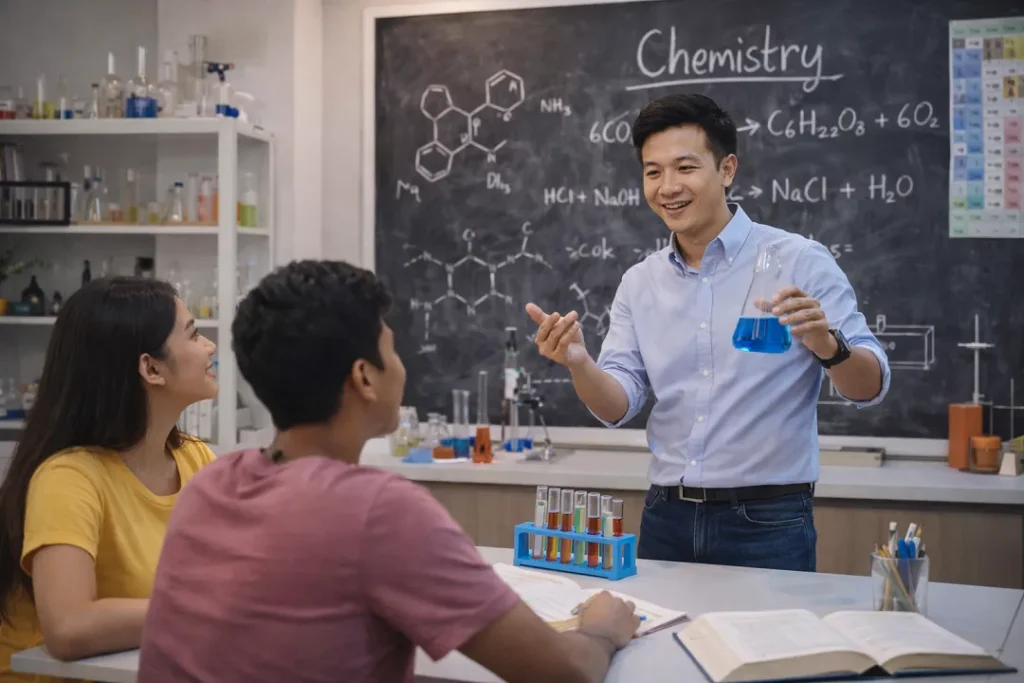
Practical assessments have always been an important part of Chemistry education in Singapore, but recent developments in teaching and assessment place greater emphasis on scientific thinking, accurate experimentation and data interpretation. Rather than simply following laboratory instructions, students are now expected to demonstrate a deeper understanding of scientific concepts while applying practical skills confidently. As a result, preparing for practical examinations requires more than memorising procedures or chemical reactions.
Chemistry Tuition provides students with structured guidance to understand the latest practical assessment expectations while strengthening both theoretical knowledge and laboratory techniques. With focused support, students can improve their confidence, reduce common practical mistakes and develop the analytical skills required to perform well in school assessments and national examinations.
Why Practical Assessments Matter More Than Ever
Chemistry is a subject that combines scientific knowledge with practical application. Practical assessments allow students to demonstrate that they can safely perform experiments, make careful observations and interpret experimental results accurately.
The Ministry of Education (MOE) encourages students to become active learners by developing investigative and problem-solving skills rather than relying solely on memorisation. Practical examinations therefore assess a student’s ability to apply scientific understanding in real laboratory situations.
Students who develop strong practical skills often find it easier to understand theoretical concepts because they can relate scientific principles to real experimental experiences.
What Are the Latest Practical Assessment Expectations?
Modern Chemistry practical assessments evaluate much more than whether an experiment is completed successfully. Students are expected to demonstrate scientific reasoning throughout every stage of the investigation.
| Assessment Area | What Examiners Expect |
| Experimental Skills | Handle apparatus correctly and perform procedures safely. |
| Observation | Record accurate and detailed observations. |
| Data Interpretation | Analyse results logically and identify patterns. |
| Scientific Explanation | Explain findings using correct Chemistry concepts. |
| Evaluation | Identify possible errors and suggest realistic improvements. |
Understanding these expectations helps students prepare more effectively before entering the laboratory.
Essential Laboratory Skills Every Student Should Develop
Strong laboratory techniques reduce mistakes and improve confidence during practical assessments.
Students should become familiar with:
- Measuring liquids accurately using appropriate equipment.
- Handling chemicals safely.
- Reading measuring instruments correctly.
- Recording observations immediately.
- Following experimental procedures systematically.
- Keeping a tidy and organised workspace.
Developing these habits early makes practical examinations much less intimidating.
Understanding Experimental Observations
One of the most common reasons students lose marks is recording incomplete observations. Practical assessments require students to notice subtle changes and describe them accurately using scientific language.
Students should observe:
- Colour changes.
- Formation of precipitates.
- Gas production.
- Temperature changes.
- Odours where appropriate.
- Dissolving behaviour.
- Reaction speed.
Accurate observations provide the evidence needed for meaningful scientific conclusions.
Improving Data Analysis and Interpretation
Collecting results is only one part of a practical assessment. Students must also explain what the data means and relate their findings to scientific concepts.
Good data analysis involves:
- Identifying trends.
- Comparing results.
- Explaining unexpected findings.
- Drawing logical conclusions.
- Supporting answers with experimental evidence.
Developing analytical thinking helps students answer practical questions more confidently.
Common Practical Assessment Mistakes
Many students understand Chemistry theory but lose marks because of avoidable laboratory errors.
Some of the most frequent mistakes include:
- Misreading measuring equipment.
- Recording incomplete observations.
- Ignoring safety procedures.
- Rushing through experiments.
- Using incorrect scientific terminology.
- Forgetting units when recording measurements.
- Making conclusions without supporting evidence.
Recognising these common mistakes allows students to improve before examinations.
Effective Revision Strategies for Practical Chemistry
Practical examination preparation should combine theoretical revision with regular exposure to laboratory-based questions.
Students can strengthen their preparation by:
- Reviewing previous practical worksheets.
- Watching laboratory demonstrations.
- Revising common experimental procedures.
- Practising observation questions.
- Understanding laboratory safety rules.
- Discussing experimental results with teachers.
Regular practice develops familiarity with different experimental situations and reduces examination anxiety.
How Chemistry Tuition Supports Practical Learning
While school laboratory sessions provide valuable experience, additional academic support often allows students to consolidate their understanding more effectively.
Quality tuition helps students:
- Understand the purpose behind each experiment.
- Strengthen theoretical concepts linked to practical work.
- Interpret experimental results confidently.
- Practise structured practical questions.
- Receive personalised feedback.
- Build confidence before school assessments.
By connecting theory with practical application, students become better prepared for both written and laboratory examinations.
Choosing the Right Chemistry Tuition
Not all tuition programmes provide the same learning experience. Parents should consider whether a tuition provider focuses on conceptual understanding rather than examination drilling alone.
Useful factors to consider include:
- Experienced tutors familiar with the Singapore MOE syllabus.
- Clear explanations of scientific concepts.
- Regular practical-based discussions.
- Opportunities to analyse experimental data.
- Constructive feedback on student progress.
- Lessons that encourage curiosity and independent thinking.
Chemistry Tuition provides valuable opportunities for students to strengthen both their theoretical understanding and practical laboratory skills through structured guidance, regular practice and personalised feedback. By learning how to interpret data, evaluate experimental outcomes and apply scientific concepts effectively, students become better prepared for school assessments, national examinations and future science learning.
Many parents choose Mavis Tutorial Centre because its structured Chemistry programmes are designed to reinforce school learning while helping students gain confidence in both theoretical and practical assessment components.
Building Confidence for Future Science Learning
Strong practical skills continue to benefit students beyond Secondary school. Laboratory confidence encourages greater curiosity, strengthens analytical thinking and prepares students for more advanced scientific studies.
Students who understand the purpose behind experiments often develop:
- Better problem-solving abilities.
- Improved logical reasoning.
- Greater scientific curiosity.
- Higher confidence during practical examinations.
- Stronger connections between theory and application.
These skills remain valuable throughout higher education and future careers involving science and technology.
Final Thoughts
Success in Chemistry practical assessments depends on much more than remembering laboratory procedures. Students need to make accurate observations, analyse experimental results critically and explain scientific concepts with confidence. As Singapore’s practical assessments continue to emphasise scientific reasoning, careful investigation and problem-solving, developing these skills early helps students approach laboratory examinations with greater accuracy, confidence and reduced stress.
For parents seeking additional academic support, Mavis Tutorial Centre offers programmes that complement classroom learning and encourage long-term scientific understanding. To learn more about its Chemistry programmes and how they can support your child’s academic journey, visit mavistutorial.com and explore learning opportunities designed for every stage of secondary education. With consistent guidance and a strong foundation in both theory and practical work, students can build lasting confidence, improve academic performance and develop the scientific skills needed for future educational and career success.